Learn, Do Not Copy!
ALL DSDWEB RESOURCES ARE FREE. Please do not pay for anything purporting to be from DSDWEB.

Show How Feedback From Others Has Developed Own Knowledge, Skills and Understanding

Silhouettes of many individuals with speech bubbles above their heads representing the giving of feedback

This page is designed to answer the following questions:

Much can be learned from getting feedback on your practice from others. This includes feedback from clients, colleagues, managers and other professionals.

Asking for feedback from others is something is often avoided in workplace environments, but it shouldn’t as it can be invaluable. If I were doing something incorrectly, I would want this to be pointed out to me. Some individuals may feel uncomfortable giving feedback, especially if it has negative overtones, so it is important to reassure them that any constructive criticism that can help improve you practice would be welcomed and not taken personally.

You may have been told by your manager that you seem to make a lot of mistakes on the balance checks. This gives you the opportunity to work with your manager to find out where you are going wrong and why and work to correct it – it may just be as simple as feeling rushed, in which case your manager should ensure you have sufficient time to do it going forward.

Or it could be that you are having difficulty motivating a client, so a colleague explains to you that this particular client responds better to staff that have a bit of banter with him. During your next shift with him, you use banter to motivate him and you have none of the previous difficulties.

Example Answer

During my first weeks working with a new client, he got upset for no apparent reason and went to his bedroom and slammed the door. He came back down a few minutes later with his hood pulled over his head and would not talk to me. I asked what was wrong and tried to converse with him for over an hour but he just ignored me.

A little later on, one of my colleagues explained to me that this particular client behaved in this way to gain attention and the best thing to do was to ignore him until he had calmed down. I put this into practice the next time he did this and within ten minutes, and after realising I wasn’t giving him any attention, his hood came down and he apologised and started chatting to me.

Show How Reflecting on a Situation Has Improved Own Knowledge, Skills and Understanding

Silhouette of a man reflecting on activities

This page is designed to answer the following questions:

Reflecting on situations that you have encountered in your role as a health and social care worker is a great way to maximise your experience and improve your practice.

NOTE: Further information on reflective practice can be found here.

You will need to explain a situation you have been in and how you reflected on it later either by yourself or as part of a group. You will want to highlight anything that didn’t go quite as well as expected and why and what you could do in a similar future situation to make it run more smoothly. If you have had a similar situation and handled it differently due to the insights you gained from your reflection, even better.

Maybe you’ve been in a predicament where a client has not wanted to take their medication and the more that you have persisted and nagged, the more they have stubbornly refused. Upon reflection, you may have concluded that it would have been better if you had been more laid-back and simply said to the client to come and find you when they’re ready to take their meds.

Or perhaps there’s been a situation where you’ve accused someone of something that they were later found to be innocent of. By virtue of self-reflection you may have learned to point the finger in future without substantial evidence.

Example Answer

Last Christmas, a client who gets very excited around this time of year was due to go home to stay with his parents from Xmas eve to Boxing Day. Unfortunately, he wanted to come home after dinner on Xmas Day, which staff facilitated (as we had a contingency rota in place).

He wouldn’t tell us why he wanted to come back as he has a great relationship with his family, Having reflected on the situation, I remembered that he had presents in his house that he was saving to unwrap when he came home. Because he gets very excitable about unwrapping presents, I realised that that was the reason he had wanted to return. The next year, we ensured that he had taken all his Xmas presents with him.

Show How a Learning Activity Has Improved Knowledge, Skills and Understanding

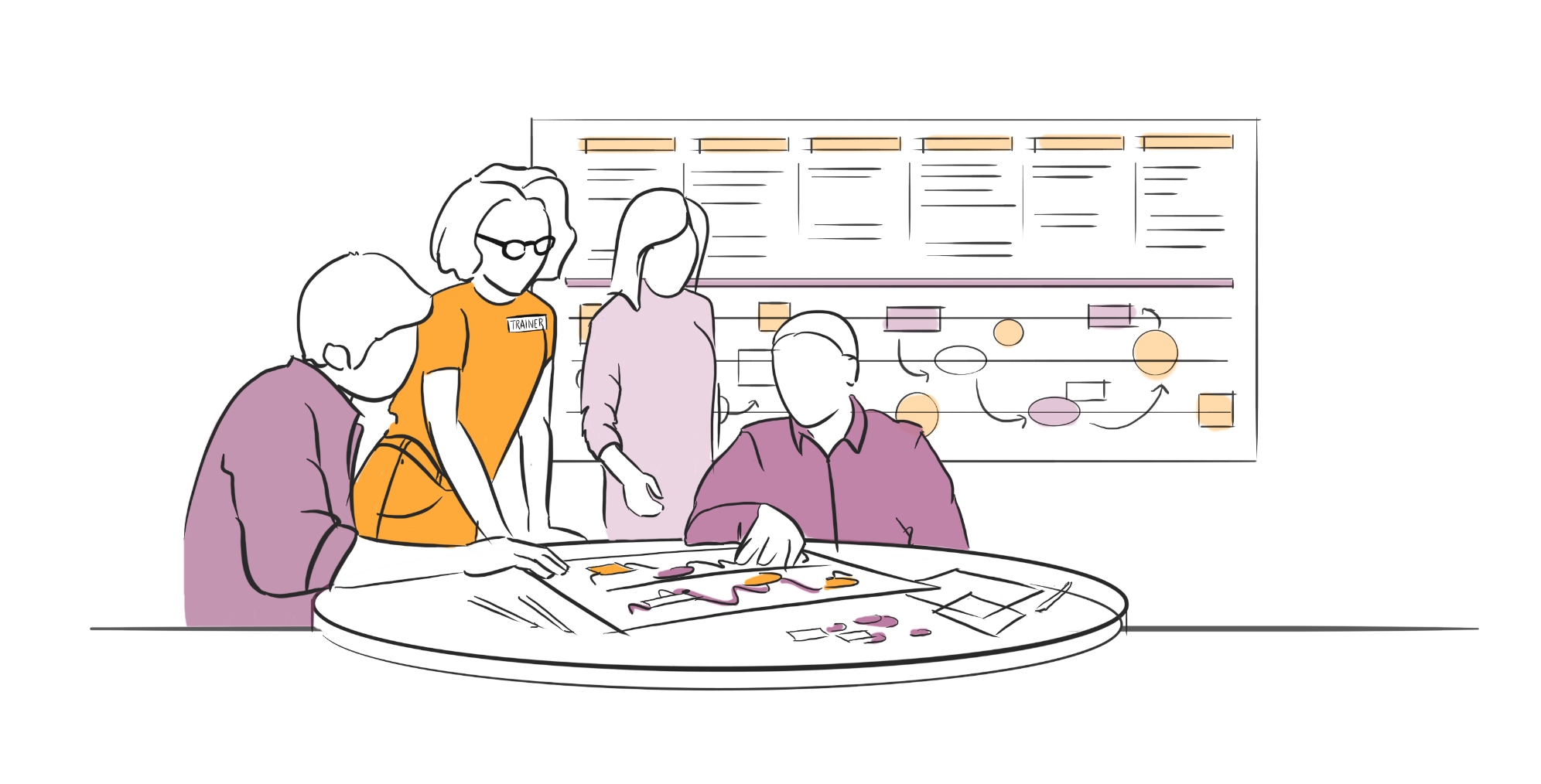
Four care workers around a table participating in a learning activity

This page is designed to answer the following questions:

It is important for a health and social care worker to proactively and continuously learn and develop and one of the ways that knowledge, skills and understanding can be improved is by partaking in learning activities.

Learning Activities

Learning activities cover a broad range of actions including:

  • Formal training, either in-house with your organisation or provided by an outside agency.
  • Meetings with colleagues and other professionals. Sharing ideas and experiences can be very useful.
  • Self-study and own research.
  • Meetings with manager, such as supervision, appraisal etc.
  • Reflective practice or thinking about work you have done and how you may do it better in future.
  • Own practice. The experience of completing tasks in own role gives you the opportunity to learn how best to do the work.

Improving Knowledge, Skills & Understanding

Thinking back to some of the learning activities that you have undertaken in the past, you should be able to identify some examples of how they have helped you in your professional development. You should also be able to evidence this in your day-to-day practice.

You may think back to when you first started working in the care industry and worked towards your Care Certificate and explain that you were unaware of your rights as an employee until you did this.

Or you may discuss a first-aid course you were on that taught you how to perform CPR – if you can provide an example of using CPR to save a life, even better!

Or maybe you could describe a time when you examined the incident record of an individual with challenging behaviour and identified a particular trigger that no-one else had noticed.

Example Answer

Shortly after joining my company, I completed an online course on Common Induction Standards, which included topics on medication, first aid, health & safety and food hygiene. I felt I learned a lot from these courses, particularly about food hygiene as I was unaware of many of the best practices. Examples included letting food cool down before putting it in the fridge and keeping raw meat separate from other foodstuffs. Now that I am much more knowledgeable in this area, I have benefited both professionally and personally.

Contribute to Drawing Up Own Personal Development Plan

Personal Development Planning

This page is designed to answer the following questions:

To achieve this assessment criteria you will need to provide evidence that you have collaborated with your manager to create your own Personal Development Plan (PDP).

The most useful piece of evidence will be your PDP itself but you can also support this with minutes from your PDP meetings, mentions of your PDP in supervisions/appraisals and a testimonial from your line manager.

You should be able to show how you have:

  • thought about and reflected on your strengths, weaknesses and goals
  • discussed your learning needs with your line manager
  • agreed with your line manager on objectives for your personal development
  • worked towards your objectives
  • reviewed and updated your objectives, as necessary

Example Answer

Along with my manager I have been fully involved in creating my personal development plan. In a recent supervision, I suggested that I work towards my Diploma in Health & Social Care Level 2, which my manager agreed with and we set a timescale for doing it within 12 months, with me to report back on my progress in each supervision. I have requested practical first aid training on multiple occasions but, as yet, have not received any. In another supervision, my manager asked me to be the Key Worker for a particular client, which I agreed to.

Objectives Timeline Actions/updates
1. Level 2 Diploma 12 mths 1. Enroll on course (done)
2. Complete nine core units (done)
3. Complete optional units (in progress)
2. First Aid Training 6 mths 1. Ask in supervision (done)
2. Ask again in supervision as not been actioned (done)
3. Await manager response. Bring up in next supervision if necessary.
3. Become Key Worker 3 mths 1. Learn key worker responsibilities (done)
2. Practice key worker responsibilities in work (in progress)


Describe the Process for Agreeing a Personal Development Plan and Identify Who Should be Involved

Personal Development Planning

This page is designed to answer the following questions:

A Personal Development Plan is an invaluable tool for the health and social care worker because learning new skills, updating existing skills and increasing understanding and efficiency are essential to the role.

What is a Personal Development Plan (PDP)?

In a nutshell, a PDP is a way to identify your learning needs and document what you need to do to achieve them. You will usually complete your PDP with your line manager and discuss what training or self-study would be useful to you and increase your effectiveness in your role.

Formalising and documenting your personal development has the benefit of turning ideas into something more concrete that is actionable and time-specific. You will usually plan your learning for the next 12 months so many organisations find it useful to tie-in creating a PDP with Annual Appraisals.

Other individuals that may have some input into your PDP are in-house Training Managers, other colleagues and even clients. Ultimately, however, the final plan will be decided by yourself and your manager.

When deciding your training needs, you should keep in mind that your learning should benefit the organisation you work for. For example, it is unlikely that a health and social care company would be willing to pay for it’s staff to go on a welding course!

Several factors will influence how you and your manager decide on your learning needs. These include:

  • Your current skillset (e.g. do you need any refreshers?)
  • Your weaknesses (e.g. maybe you need to brush up your Numeracy or IT skills)
  • Your career goals (e.g. leadership training for those wishing to advance)
  • Organisation needs (e.g. do a certain number of staff need to be trained as first-aiders or fire marshalls?)
  • Service/setting needs (e.g. do staff need training on certain equipment in the service such as a hoist?)
  • Client needs (e.g. does the client require staff with specialist medical training such as epilepsy or diabetes?)

How to Write a Personal Development Plan

A good place to start on your PDP is to look at your current strengths and weaknesses. What are you good at? What needs improvement? If you’ve recently reflected on some work you did, you may have identified a need for some specific training. Then take a look at your own long-term goals and see what sort of training and development is essential or desirable to achieve them. Also look at how this training would be beneficial to you organisation.

Then, discuss this with your line manager. You manager should also be able to help you with guidance and advice and may offer some organisational specific suggestions.

Next, write a list of your personal development goals for the year along with specific deadlines for achieving them, the actions that need to be taken and by whom. For example:

Goal By when? Action needed By whom?
1. Complete Level 3 Diploma Jan 2020 Seek provider
Enroll
Manager
Me
2. First Aid Training May 2019 Arrange with Training Manager Me

Over the following months, keep your PDP updated as and when you complete your goals and keep reviewing it to make sure you are on track.

In twelve months time, you and your manager should sit down again and discuss your PDP. Did you complete or you goals? If not, why not? Have your career aspirations changed over the year? What goals should be set for the following twelve months?

Personal Development Planning is a continuous process and will provide you with a roadmap to stay organised and keep on top of your learning.

Example Diploma Answer

My personal development plan is usually discussed between myself and my manager in my supervision. During this meeting, my manager will also pass on any ideas for training that senior management think I will benefit from. We will then agree on some objectives for my personal development and discuss what methods we can use to achieve these objectives, whether it be formal training (either internal or external), working towards a qualification or doing my own research. Finally, we will set a timescale for me to achieve these objectives and arrange a schedule to review my progress.